ଗବେଷଣା

ମୁଁ କାହା ଉପରେ କାମ କରେ: TMD, GPD, ଫର୍ମ ଫ୍ୟାକ୍ଟର ଓ ନ୍ୟୁକ୍ଲିୟାର ମାଧ୍ୟମରେ ହାଡ୍ରୋନ୍ ଗଠନ।

ମୁଁ କଣ କରେ

ଗବେଷଣା କ୍ଷେତ୍ର

ମୁଁ ଲାଇଟ୍-ଫ୍ରଣ୍ଟ ୱେଭ୍ ଫଙ୍କସନ୍ ଦ୍ୱାରା ପାଇଅନ୍‌ଠାରୁ ବଟମୋନିୟମ୍ ପର୍ଯ୍ୟନ୍ତ ହାଡ୍ରନ୍‌ର ତ୍ରି-ମାତ୍ରିକ, ସ୍ପିନ୍ ଓ ଯାନ୍ତ୍ରିକ ଗଠନ ଅଧ୍ୟୟନ କରେ।

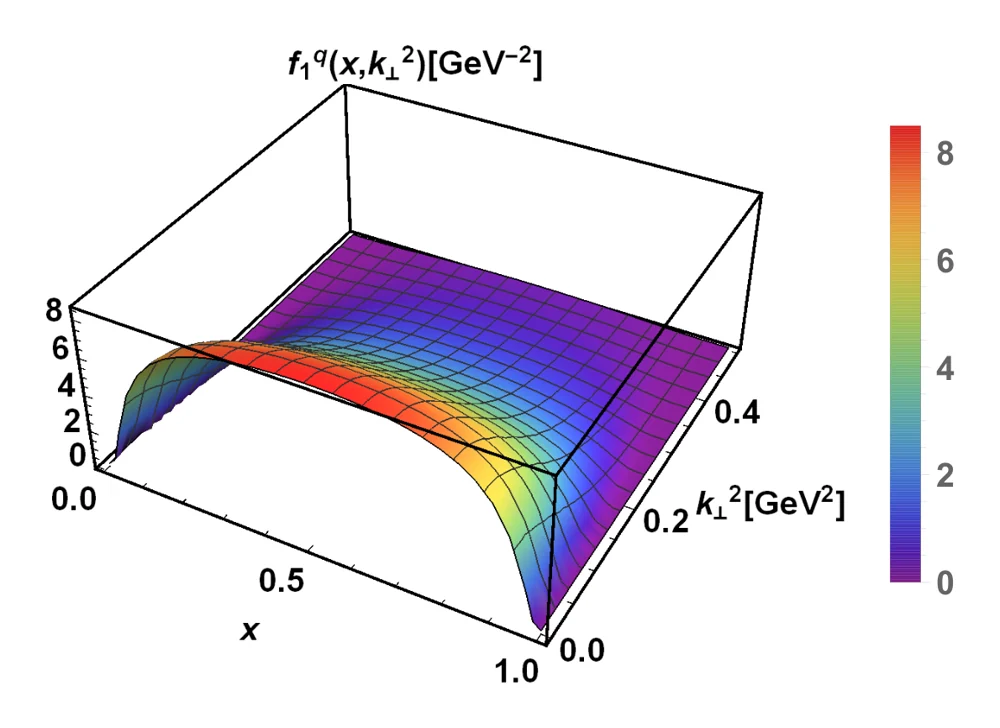
Unpolarized pion TMD f₁(x, k⊥²) in the light-cone quark model
Unpolarized pion TMD f₁(x, k⊥²) in the light-cone quark model · arXiv:2310.03464
1 / 6

ହାଲୁକା ମେସନ୍‌ର ତ୍ରି-ମାତ୍ରିକ ଚିତ୍ର

ପାଇଅନ୍ ଓ କାଅନ୍‌ର ମୋମେଣ୍ଟମ୍ ଓ ସ୍ଥାନିକ ଟୋମୋଗ୍ରାଫି — TMD, GTMD, GPD ଓ ସ୍ପିନ୍-ଅର୍ବିଟ୍ ସମ୍ପର୍କ।

How quarks move and where they sit inside the pion and kaon, computed as overlaps of light-front wave functions in the light-front quark model and the holographic model. I derived all time-reversal-even TMDs of π⁺ and K⁺ up to twist-4, and — by solving the quark–quark correlator — the twist-2, 3 and 4 GTMDs of the pion, of which 12 of the 16 are non-zero; TMDs and GPDs then follow as limits of the same objects. The same wave functions give quark spin–orbit correlations for spin-0 and spin-1 mesons and the transverse and spatial structure of mesons from π⁺ to ηb.

  • All T-even TMDs of π⁺ and K⁺ up to twist-4 (JHEP 2024 — my most-cited paper)
  • 12 of 16 pion GTMDs non-zero at twists 2–4 (PTEP 2025)
  • Spin–orbit correlations from GTMDs and GPDs, spin-0 and spin-1 (PRD 2024)
  • Transverse and spatial structure from π⁺, K⁺ to ηc, ηb (PRD 2025)
TMDs to twist-4GTMDsGPDsSpin–orbitLFQM
ସମ୍ପର୍କିତ ପ୍ରକାଶନ (5)
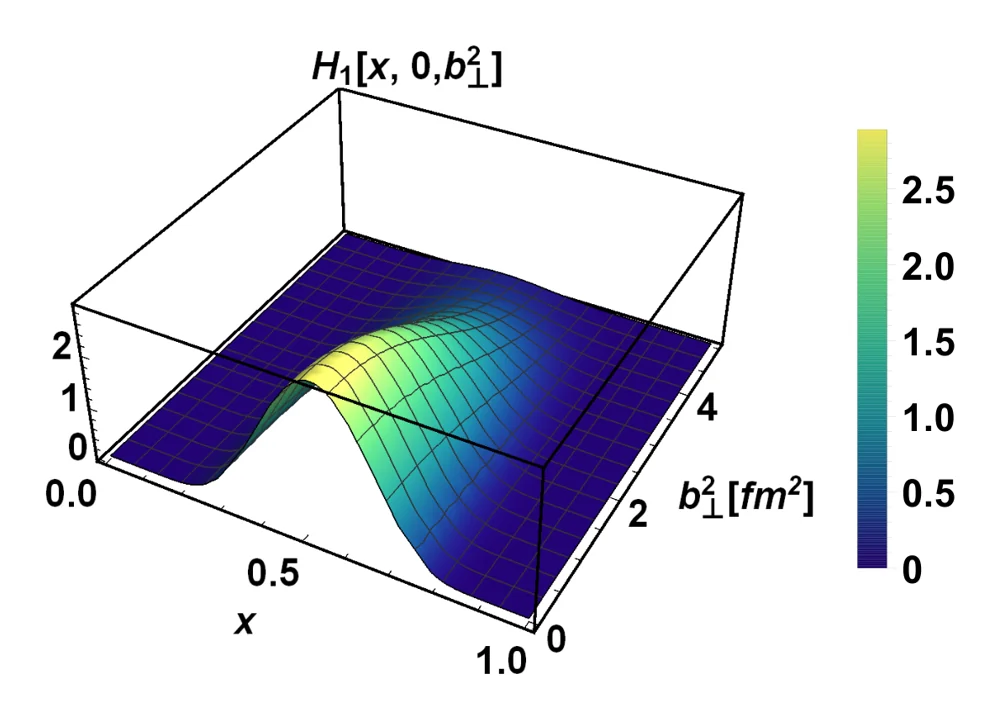
Impact-parameter GPD H₁(x, 0, b⊥²) of the J/ψ
Impact-parameter GPD H₁(x, 0, b⊥²) of the J/ψ · arXiv:2505.09213
2 / 6

ସ୍ପିନ୍-୧ ହାଡ୍ରନ୍ ଓ ଫୋଟନ୍

ρ, J/ψ, Υ ଓ ଫୋଟନ୍‌ର ଗଠନ — TMD, GPD, ଫର୍ମ ଫ୍ୟାକ୍ଟର୍ ଓ PDF।

A spin-1 hadron has more distributions than a pion because it can be tensor-polarized. I computed the leading-twist T-even TMDs of J/ψ and Υ in the light-front quark model and holographic model (compared with Bethe–Salpeter results), the chiral-even vector GPDs of ρ and J/ψ with their charge, magnetic and quadrupole form factors, and the leading and subleading-twist PDFs of the ρ with two different spin wave functions, evolved at NLO. Treating the photon as a quark–antiquark state, I gave all its leading-twist T-even TMDs for both real and virtual photons.

  • Leading-twist TMDs of J/ψ and Υ (PRD 2024)
  • Vector GPDs and GC, GM, GQ of ρ and J/ψ (PRD 2025)
  • ρ-meson PDFs with two spin wave functions, NLO evolution
  • Photon TMDs for real and virtual photons (EPJA 2025)
ρ, J/ψ, ΥTensor polarizationVector GPDsPhoton TMDs
ସମ୍ପର୍କିତ ପ୍ରକାଶନ (5)
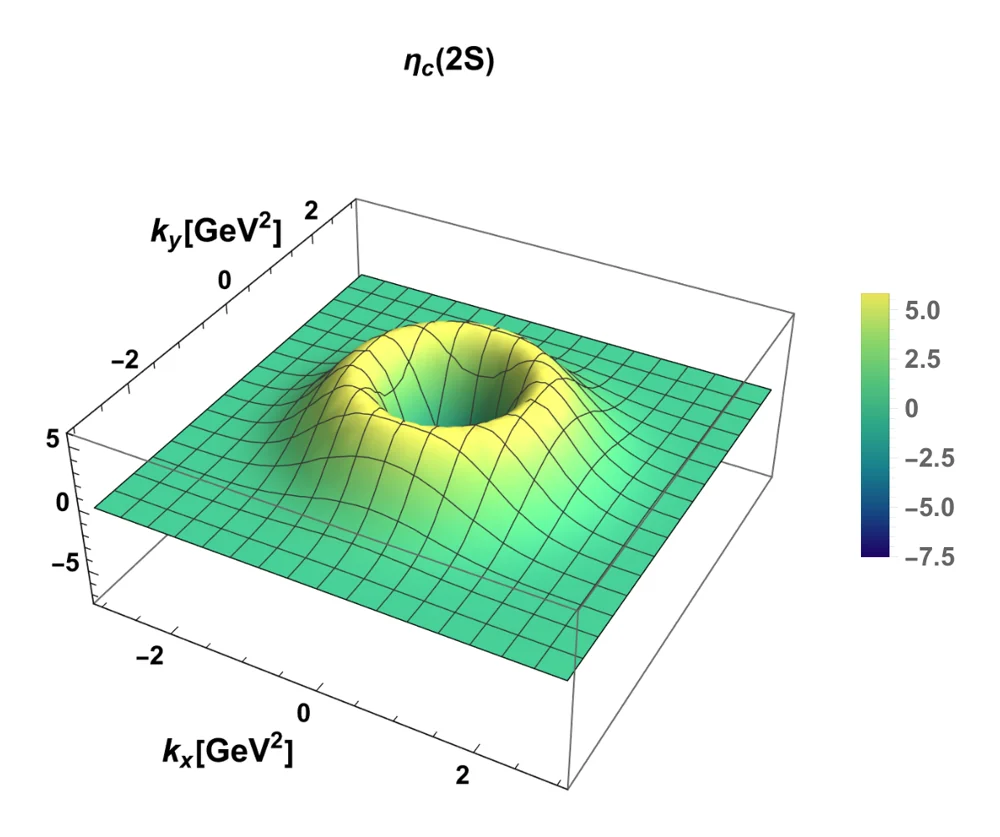
ηc(2S) light-front wave function, showing its radial node
ηc(2S) light-front wave function, showing its radial node · arXiv:2408.07715
3 / 6

କ୍ୱାର୍କୋନିୟମ୍ ଓ ଭାରୀ ମେସନ୍

ଚାର୍ମୋନିୟମ୍ ଓ ବଟମୋନିୟମ୍ — ଉତ୍ତେଜିତ ଅବସ୍ଥା, ଡିକେ କନଷ୍ଟାଣ୍ଟ ଓ E1 ବିକିରଣ ପରିବର୍ତ୍ତନ।

Heavy quarkonia are the cleanest place to test a relativistic bound-state model. I studied the 1S, 2S, 3S and 1P states of charmonium and bottomonium in the light-front quark model — the 3S and 1P states had rarely been treated this way — including their wave-function nodes, decay constants, distribution amplitudes, PDFs and form factors, compared with BLFQ. With the same wave functions I computed the radiative transitions χc0 → J/ψ γ, ψ(2S) → χc0 γ, hc(1P) → ηc(1S) γ and ηc(2S) → hc(1P) γ: transition form factors, decay widths and branching ratios. The same framework extends to the parton distributions of Ds, B and ηc, ηb.

  • 1S, 2S, 3S and 1P charmonia and bottomonia (Chin. Phys. C 2025)
  • Four E1 transitions: χc0→J/ψγ, ψ(2S)→χc0γ, hc→ηcγ, ηc(2S)→hcγ
  • PDFs of K, Ds, B and ηc, ηb at NLO
  • Heavy B and D mesons in 3D (PoS HQL 2023)
CharmoniumBottomoniumRadial excitationsE1 transitions
ସମ୍ପର୍କିତ ପ୍ରକାଶନ (4)
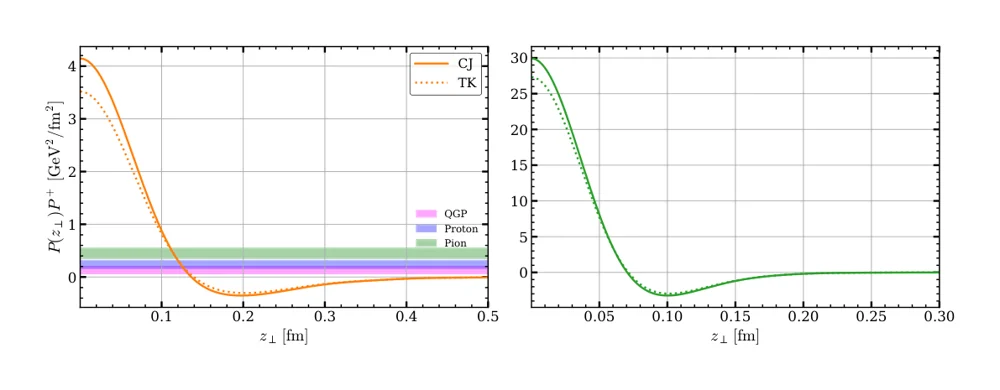
Pressure distribution inside ηc (left) and ηb (right)
Pressure distribution inside ηc (left) and ηb (right) · arXiv:2606.07073
4 / 6

ଫର୍ମ ଫ୍ୟାକ୍ଟର୍ ଓ ଯାନ୍ତ୍ରିକ ଗଠନ

ହାଡ୍ରନ୍ ଭିତରେ ଚାପ ଓ ଶିଅର୍ — ଗ୍ରାଭିଟେସନାଲ୍ ଓ ଇଲେକ୍ଟ୍ରୋମ୍ୟାଗ୍ନେଟିକ୍ ଫର୍ମ ଫ୍ୟାକ୍ଟର୍।

Form factors are the moments of GPDs that experiments can reach. I calculated the scalar (twist-3), vector and tensor (twist-2) form factors of the pion and kaon from their GPDs in the light-cone quark model and compared them with lattice QCD and data. For the pseudoscalar charmonium and bottomonium states ηc and ηb I evaluated the gravitational form factors A(t) and the D-term, and from them the transverse distributions of energy, pressure and shear force, testing their sensitivity to two different Gaussian wave functions.

  • Scalar, vector and tensor form factors of π and K (PRD 2025)
  • Gravitational form factors A(t), D(t) of ηc and ηb
  • Pressure, shear-force and energy densities in the transverse plane
  • Comparison with lattice QCD
Gravitational FFsD-termPressure & shearTensor FFs
ସମ୍ପର୍କିତ ପ୍ରକାଶନ (2)
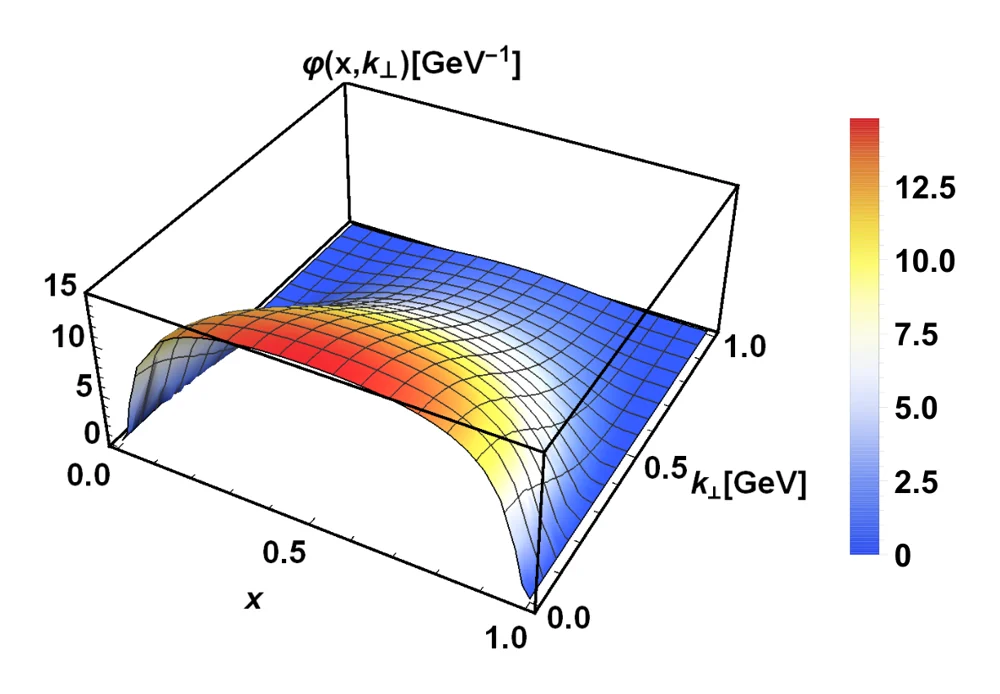
Pion light-cone wave function φ(x, k⊥) used as input for the medium study
Pion light-cone wave function φ(x, k⊥) used as input for the medium study · arXiv:2408.07334
5 / 6

ନ୍ୟୁକ୍ଲିୟର୍ ପଦାର୍ଥରେ ହାଡ୍ରନ୍

ଘନ ଓ ଉଷ୍ମ ନ୍ୟୁକ୍ଲିୟର୍ ପଦାର୍ଥରେ π, K, ρ, D ଓ B ମେସନ୍‌ର ପରିବର୍ତ୍ତନ।

A meson inside a nucleus is not the meson in vacuum. I combine the chiral SU(3) quark mean-field model — which gives the effective quark masses at finite baryon density, isospin asymmetry and temperature — with the light-front and light-cone quark models, and follow the change in decay constants, distribution amplitudes, PDFs, TMDs, spatial distributions and spectra. The series covers the pion (at zero and finite temperature), the charged kaon, the ρ, and the D, D*, B and B* mesons; a parallel study uses the two-flavour NJL model for the pion at finite baryon density.

  • Pion DAs and PDFs in asymmetric matter at finite T (PRD 2024)
  • Pion TMDs in medium (PLB 2024)
  • Kaon, D/D*, B/B* and ρ in asymmetric or symmetric matter
  • NJL pion at finite baryon density
Chiral SU(3) quark mean fieldIsospin asymmetryFinite temperatureIn-medium PDFs & TMDs
ସମ୍ପର୍କିତ ପ୍ରକାଶନ (8)
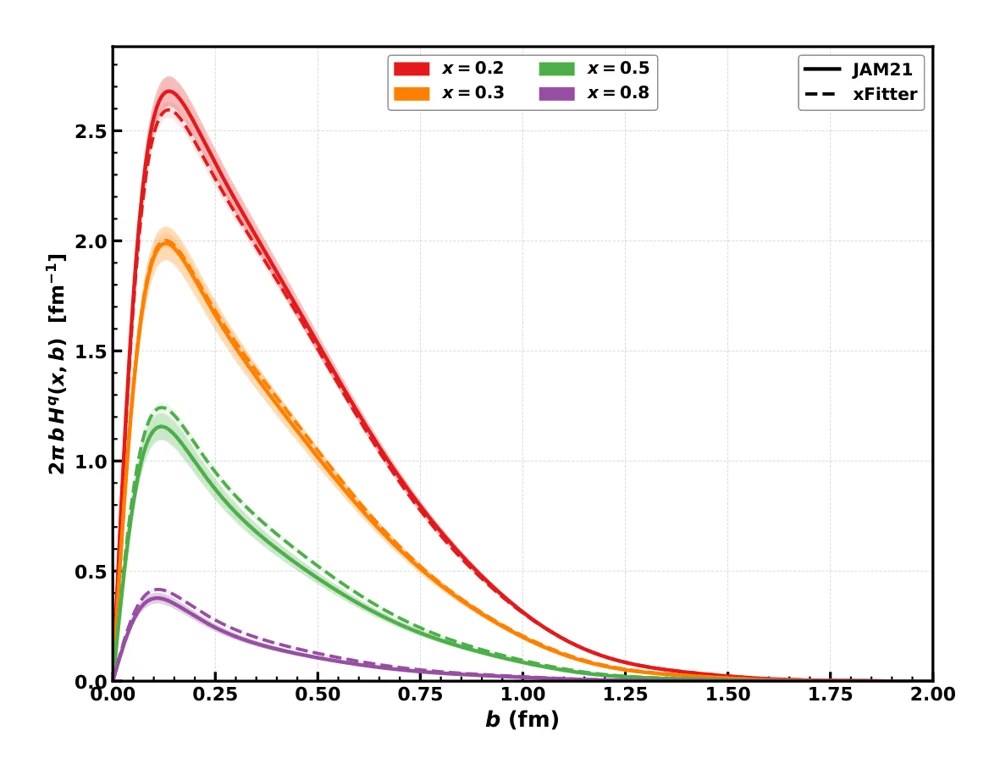
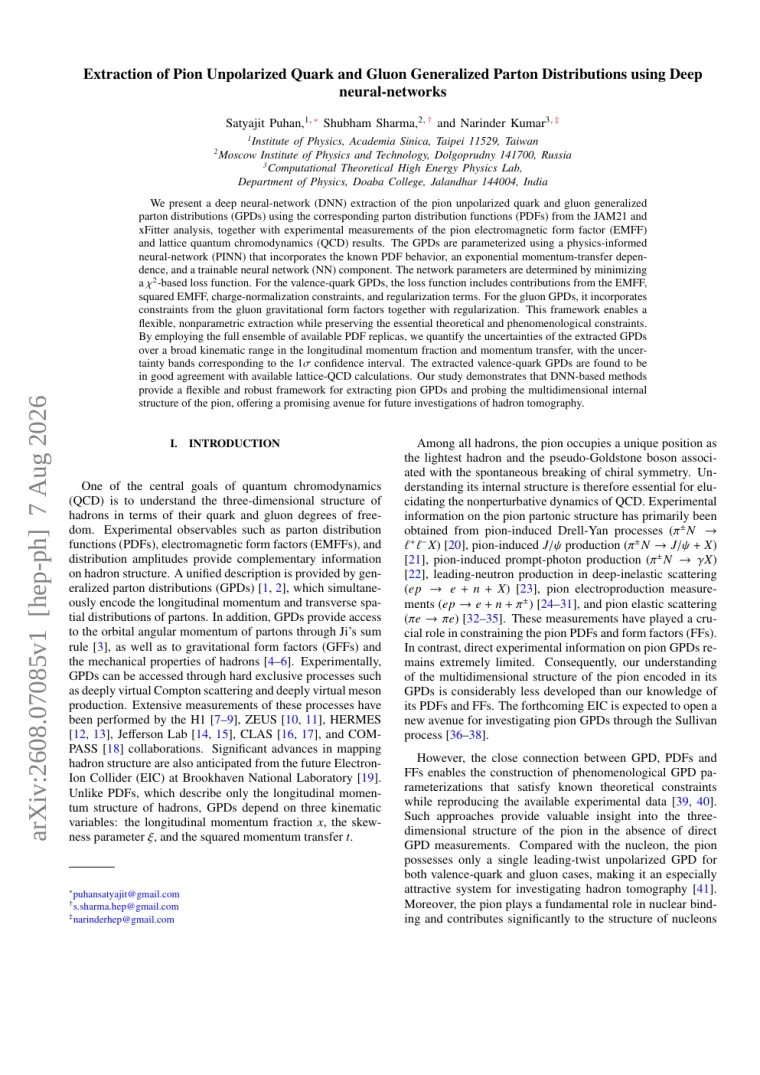
Pion quark density 2πb H^q(x, b) from the neural-network fit, with uncertainty bands
Pion quark density 2πb H^q(x, b) from the neural-network fit, with uncertainty bands · arXiv:2608.07085
6 / 6

ତଥ୍ୟ-ଭିତ୍ତିକ ନିଷ୍କାସନ ଓ କୋଲାଇଡର୍ ଫେନୋମେନୋଲୋଜି

ନ୍ୟୁରାଲ୍ ନେଟୱାର୍କ ଦ୍ୱାରା ପାଇଅନ୍ GPD ନିଷ୍କାସନ ଓ NICA-SPD, HERA, EIC ପାଇଁ ପୂର୍ବାନୁମାନ।

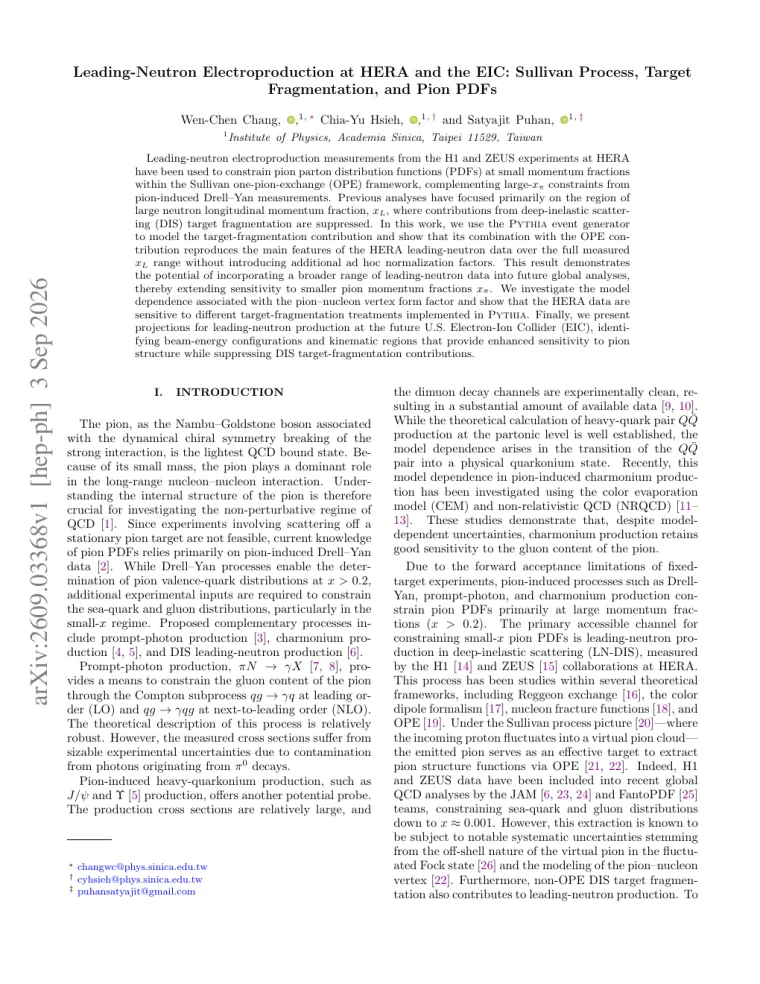
Models have to meet data. I extracted the pion's unpolarized quark GPDs at zero skewness from a global fit to the pion electromagnetic form factor and PDFs, and then the quark and gluon GPDs with a physics-informed deep neural network trained on JAM21 and xFitter PDFs, form-factor data and lattice QCD, giving the pion's quark and gluon densities in the transverse plane. I also tested light-cone-quark-model pion PDFs against experimental extractions after DGLAP evolution, studied the gluon helicity Δg at x ≈ 0.1–0.2 through the J/ψ double-spin asymmetry ALL at NICA-SPD (√s ≈ 27 GeV), and used HERA leading-neutron data in the Sullivan process to constrain pion PDFs at small x, with projections for the EIC.

  • Pion quark GPDs from a global form-factor + PDF fit
  • Quark and gluon GPDs with a physics-informed neural network
  • Gluon helicity from J/ψ ALL at NICA-SPD, √s ≈ 27 GeV
  • Leading-neutron electroproduction at HERA and the EIC
Neural-network GPDsPion PDFsNICA-SPDHERA & EIC
ସମ୍ପର୍କିତ ପ୍ରକାଶନ (5)

ଆଗକୁ

ଭବିଷ୍ୟତ ଗବେଷଣା ଯୋଜନା

ଆଗାମୀ କାର୍ଯ୍ୟ — ଏବେ ଆରମ୍ଭ କରୁଥିବା ସମସ୍ୟାଠାରୁ କଠିନ, ଖୋଲା ପ୍ରଶ୍ନ ପର୍ଯ୍ୟନ୍ତ।

  1. ପରବର୍ତ୍ତୀ ପଦକ୍ଷେପ · ୨୦୨୬–୨୭

    Energy-momentum tensor of spin-1 mesons

    କଠିନତା 3 / 5

    The full set of gravitational form factors of the ρ meson and of heavy vector mesons (J/ψ, Υ) in the light-front quark model — including the D-term — and from them the pressure, shear-force and energy distributions, the mechanical radius and the quadrupole deformation of a spin-1 hadron.

    କାହିଁକି କଠିନ: A spin-1 hadron has six gravitational form factors instead of two, some only reachable from 'bad' current components, and the mechanical picture of a tensor-polarized state is still being worked out.

    Pion and kaon imaging at the EIC and EicC

    କଠିନତା 2 / 5

    Sullivan-process projections for pion and kaon PDFs, GPDs and TMDs with realistic kinematics and uncertainties, so that light-front predictions can be tested directly against the first electron-ion collider data.

    କାହିଁକି କଠିନ: The meson target is virtual: separating the pion-pole contribution from background needs careful control of off-shell effects and the leading-neutron flux.

  2. ମଧ୍ୟମ ଅବଧି · ୨୦୨୭–୨୯

    First-principles light-front quark model for the pion

    କଠିନତା 5 / 5

    Replace the phenomenological Gaussian wave function with the solution of a light-front Hamiltonian eigenvalue problem — confinement, one-gluon exchange and a chiral-symmetry-breaking interaction — with parameters fixed by the meson spectrum, then predict the pion's PDFs, GPDs, TMDs and form factors with no fitting.

    କାହିଁକି କଠିନ: The pion is the Goldstone boson of chiral symmetry: getting a nearly massless bound state from massive constituents on the light front, with zero modes and renormalisation under control, is one of the long-standing open problems of the formalism.

    Gluons in mesons and the origin of mass

    କଠିନତା 4 / 5

    Gluon GPDs and gluon gravitational form factors of the pion and kaon, and a decomposition of their mass into quark, gluon and trace-anomaly contributions — connected to J/ψ threshold photoproduction at JLab and the EIC.

    କାହିଁକି କଠିନ: Gluons are invisible to the photon at leading order, and the trace-anomaly term is scheme dependent — the decomposition has to be defined carefully before it can be computed.

  3. କଠିନ ଖୋଲା ସମସ୍ୟା

    Data-driven 3D tomography with machine learning

    କଠିନତା 4 / 5

    A global extraction of pion GPDs that combines lattice QCD, form-factor and Drell–Yan data with neural networks, with honest uncertainties — building on our deep-neural-network GPD extraction.

    କାହିଁକି କଠିନ: GPDs are not measured directly: the inverse problem from observables to three-dimensional distributions is ill-posed, so the physics constraints (polynomiality, positivity) must be built into the network itself.

    Hadrons under pressure in dense matter

    କଠିନତା 4 / 5

    How the internal pressure and shear of mesons change inside nuclear matter and at neutron-star densities — the energy-momentum tensor of a hadron in a medium, extending our nuclear-medium TMD and GPD work.

    କାହିଁକି କଠିନ: In a medium Lorentz symmetry is broken, so the vacuum decomposition of the energy-momentum tensor no longer holds and new form factors appear.

ଖୋଲା ବିଜ୍ଞାନ

GitHub ରେ କୋଡ୍

ମୋ ଗବେଷଣା ପଛର କୋଡ୍, ଡାଟା ଓ ଚିତ୍ର। ବ୍ୟବହାର କଲେ ଦୟାକରି ରିପୋଜିଟୋରୀକୁ ସାଇଟ୍ କରନ୍ତୁ।

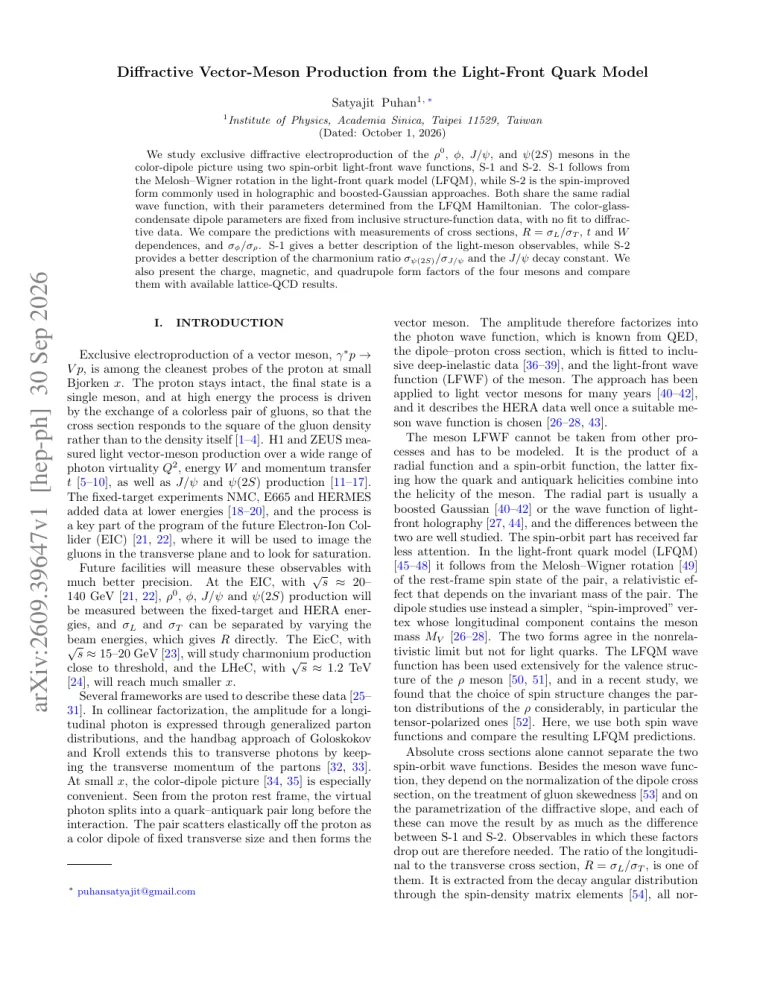
ଡିଫ୍ରାକ୍ଟିଭ୍ ଭେକ୍ଟର-ମେସନ୍ ଉତ୍ପାଦନ

କଲର-ଡାଇପୋଲ୍ ଚିତ୍ରରେ ρ, φ, J/ψ ଓ ψ(2S) ଉତ୍ପାଦନର କୋଡ୍, ଡାଟା ଓ ଚିତ୍ର (arXiv:2609.39647)।

Vector-Meson-Production-LFQM କୋଡ୍ · ଡାଟା · ଚିତ୍ର

ପାଇଅନ୍ ଓ କାଅନ୍ ରୁ ଫୋଟନ୍ TDA

ଲିଡିଂ-ଟ୍ୱିଷ୍ଟ ଭେକ୍ଟର ଓ ଆକ୍ସିଆଲ୍ π⁺ → γ ଓ K⁺ → γ ଟ୍ରାଞ୍ଜିସନ୍ ଡିଷ୍ଟ୍ରିବ୍ୟୁସନ୍ ଆମ୍ପ୍ଲିଚ୍ୟୁଡ୍। ପେପର୍ ପ୍ରସ୍ତୁତି ଚାଲିଛି।

Pion-Kaon-Photon-TDAs-LFQM ଚିତ୍ର · କୋଡ୍ ଅନୁରୋଧରେ

ଲାଇଟ୍-ଫ୍ରଣ୍ଟରେ ଡ୍ୟୁଟେରନ୍

କୋଡ଼ିଏଟି ଡ୍ୟୁଟେରନ୍ ମଡେଲ୍ ଲାଇଟ୍-ଫ୍ରଣ୍ଟ ତରଙ୍ଗ ଫଙ୍କସନ୍ ଭାବରେ: ଫର୍ମ ଫ୍ୟାକ୍ଟର୍, ଷ୍ଟ୍ରକ୍ଚର୍ ଫଙ୍କସନ୍, GPD ଓ TMD, ଡାଟା ସହ ତୁଳନା।

Deuteron-Light-Front ଚିତ୍ର · କୋଡ୍ ଅନୁରୋଧରେ

Curve Fit Bench

ପଦାର୍ଥବିଜ୍ଞାନୀଙ୍କ ପାଇଁ ମାଗଣା ଅନଲାଇନ୍ କର୍ଭ ଫିଟର୍ ଓ ଡାଟା ଫିଟର୍: 440+ ଭୌତିକ ମଡେଲ୍, ସ୍ୱୟଂଚାଳିତ ମଡେଲ୍ ଚୟନ ଓ ଅନିଶ୍ଚିତତା, ସବୁ ବ୍ରାଉଜର୍‌ରେ। ଶିବାନୀ ମାଲଭୀଙ୍କ ସହ।

curvefitbench.github.io/app ମାଗଣା ଅନଲାଇନ୍ ଆପ୍

ମୋର ସବୁ କୋଡ୍, ଓ ଅନୁରୋଧରେ ମିଳୁଥିବା କୋଡ୍ →

ଦକ୍ଷତା

ବୈଷୟିକ ଦକ୍ଷତା ଓ ଉପକରଣ

ମୋ ଗବେଷଣାରେ ବ୍ୟବହୃତ ତତ୍ତ୍ୱଗତ କାଠାମୋ, ଗଣନାତ୍ମକ ଉପକରଣ ଓ ପ୍ରୋଗ୍ରାମିଂ ଭାଷା।

Mathematica (Expert)95%
Python / NumPy / SciPy (Expert)92%
Light-Front Quark Model (LFQM)95%
NJL / DS-BSE / Spectator Models85%
LHAPDF / xFitter / DGLAP / CSS / iminuit90%
LaTeX / Overleaf / Scientific Writing95%
Neural Networks / ML / Monte Carlo (Pythia)75%
C++ / Linux / Git60%

ଗବେଷଣା ଫଳାଫଳ

Publications

ପ୍ରତ୍ୟେକ ପ୍ରକାଶନ ପାଇଁ INSPIRE-HEP, arXiv ଓ DOI ଲିଙ୍କ୍ ଦିଆଯାଇଛି।

ସମ୍ପୂର୍ଣ୍ଣ INSPIRE-HEP ରେକର୍ଡ · 44 papers · 231 citations

ସମସ୍ତ 45 ପ୍ରକାଶନ ଦେଖନ୍ତୁ →